EQUINE LAW

Equine Lawyers 
on the Gold Coast and Northern NSW


At CJM Lawyers, we assist clients across the equine sector by providing clear, practical legal advice tailored to their circumstances. This includes preparing and reviewing agreements, advising on risk management and compliance, and assisting with dispute resolution where issues arise. Our approach is focused on helping clients make informed decisions while reducing uncertainty and exposure to risk.

The equine industry involves a diverse range of participants, from individual horse owners through to commercial operations, trainers, and service providers. Legal matters in this area often involve a combination of contractual, commercial, and risk considerations, many of which arise from informal arrangements or longstanding industry practices.

Our Equine Law Services Include

Click on each service tile to learn more about how we can help.

Legal Knowledge, Genuine Equine Experience

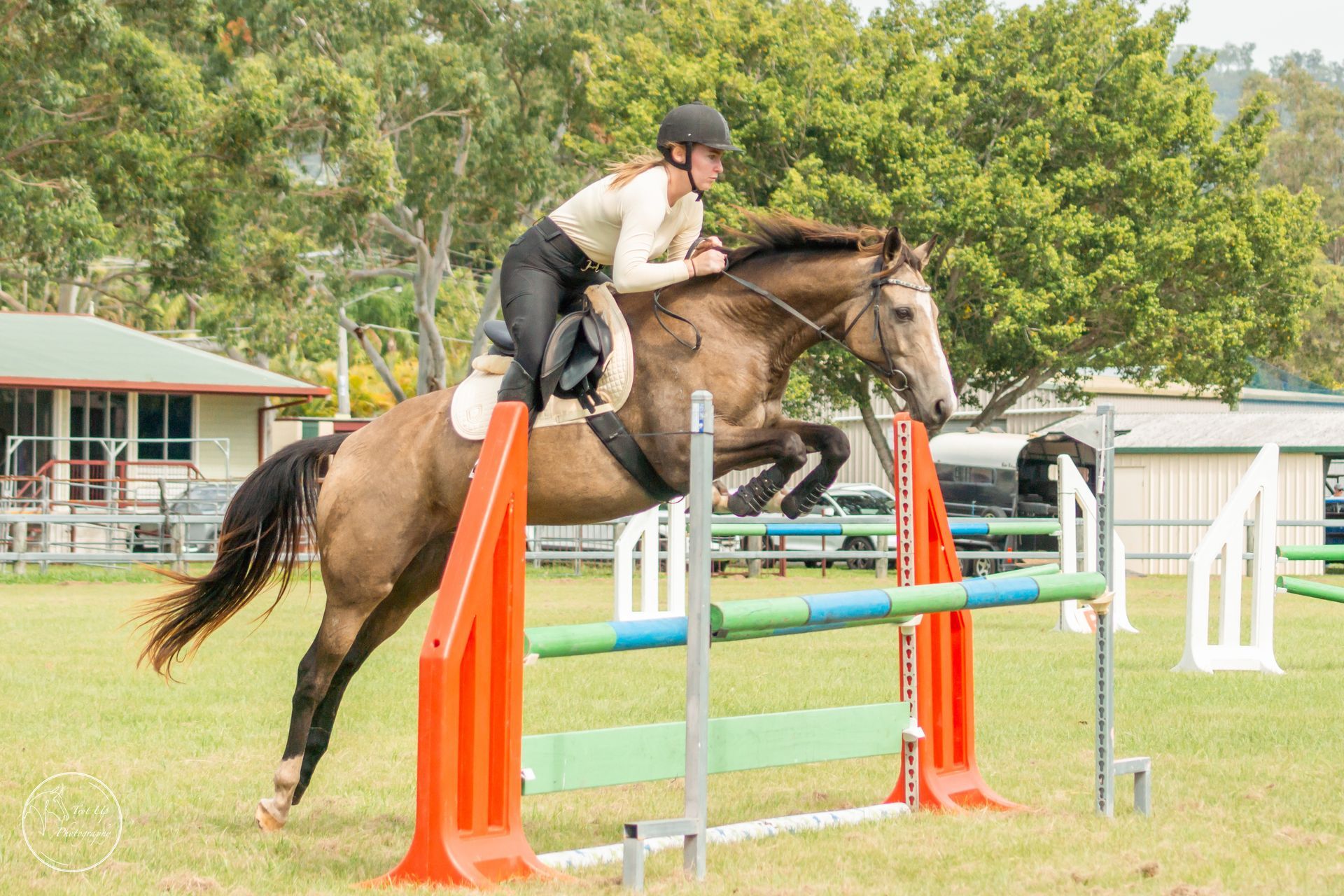
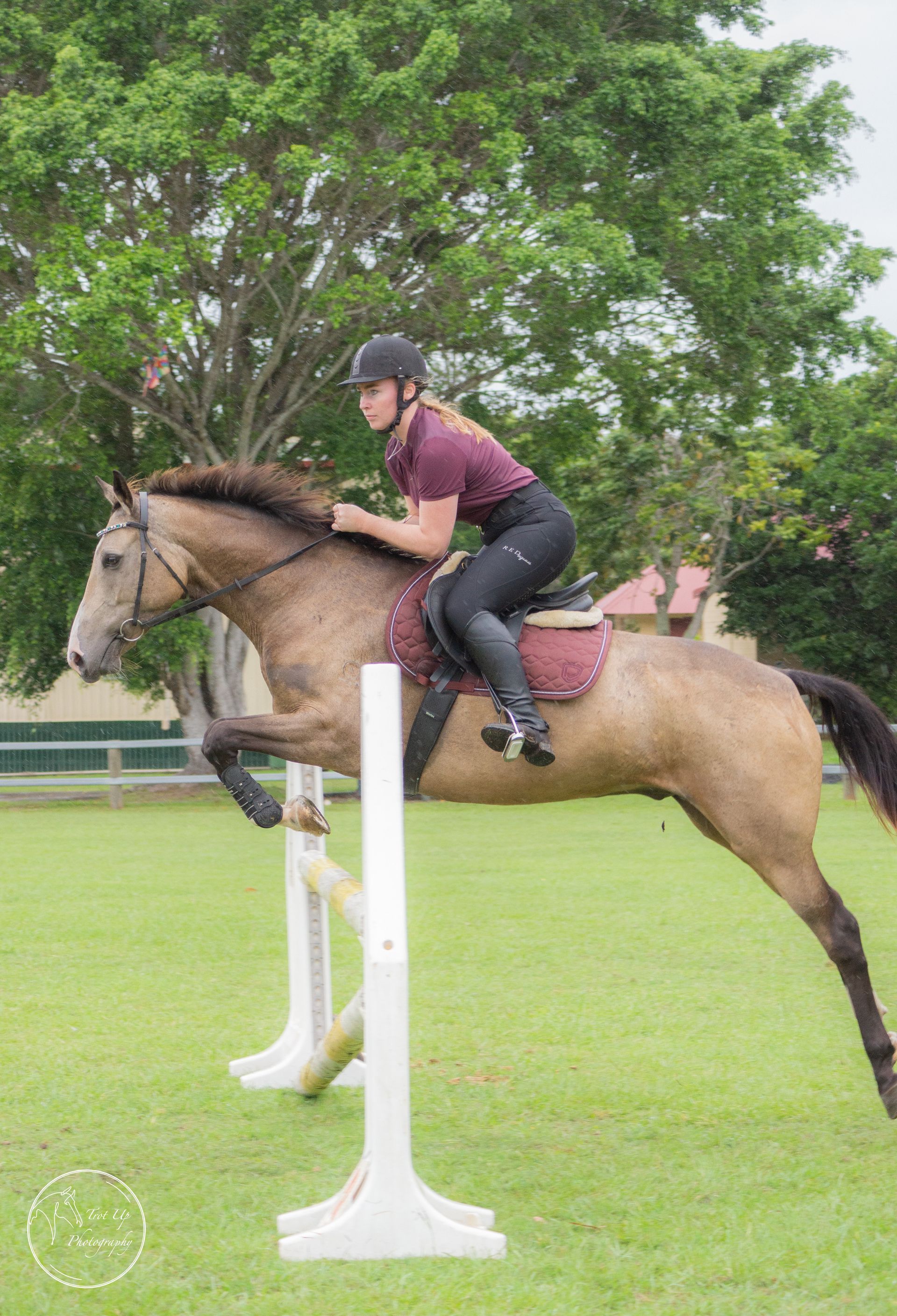
Our equine practice is led by Charlotte Sly, a commercial lawyer and active equestrian in show jumping and dressage and rehabilitates rescue horses. You get advice from someone who understands both the law and the realities of the horse world.

Meet Charlotte

WHO WE ASSIST

We provide legal advice for:

Owners & Properties

  • Horse owners
  • Trainers and coaches
  • Breeders and stud operators
  • Agistment property owners

Business & Organisations

  • Riding schools
  • Equine businesses
  • Rural property owners
  • Competition organisers
  • Club committees and boards
  • Sale and auction operators
  • Online marketplace operators

Professionals & Service Providers

  • Veterinarian practices
  • Equine service providers, including farriers, bodyworkers and chiropractors

Common Equine Legal Issues We Assist With

Many equine disputes arise because arrangements are informal, expectations are unclear or agreements have not been properly documented.

Seeking legal advice early can help reduce risk, avoid disputes and protect your interests.

Horse Ownership Disputes

Disputes over horse ownership can arise between family members, business partners, syndicate participants, trainers and buyers. We assist clients with ownership disagreements, competing ownership claims, possession disputes and the interpretation of ownership agreements.


Horse Racing Shares & Syndicate Advice

Before buying shares in a racehorse or joining a horse syndicate, it is important to understand your rights, obligations and how decisions will be made. Your say may be limited when it comes to where and how the horse is trained or raced, when and how much the horse is sold for, what happens at the end of its racing career and when costs are payable.

Agistment Disputes & Unpaid Fees

Agistment disputes are one of the most common issues in the equine industry. We assist horse owners and agistment providers with:

  • Unpaid agistment fees
  • Recovery of outstanding debts
  • Breaches of agistment agreements
  • Disputes regarding horse care responsibilities
  • Abandoned horses on agistment properties

Horse Sale & Purchase Disputes

Buying a horse can lead to legal issues if the horse is not what you were told it was, or if important information was not properly disclosed before the sale.We can advise on horse sale disputes, misrepresentation, any recourse you may have against the seller and why timing can be important when deciding what steps to take.

Abandoned Horses on Property

Property owners may encounter situations where horses are left on their property without payment or ongoing arrangements. These situations often create legal and financial challenges concerning ownership, animal welfare responsibilities and recovery of costs. We can provide advice on the options available, and the steps required to protect your position.

Legal Advice for Equine Businesses

Whether you operate a riding school, agistment property, breeding operation or equine service business, we can assist with contracts, employment matters, risk management, compliance issues and commercial disputes. Our team provides practical legal advice tailored to the unique needs of equine businesses and industry participants.

Who cares for your horse when you no longer can?

For many owners, a horse is both family and a significant ongoing responsibility. Milliann Cadieux, our Wills and Estates lawyer with a lifelong connection to horses, can help you plan for what happens to your horse if you pass away or can no longer care for them. From deciding who will take over their care, to setting aside funds for their future. It’s an often-overlooked part of estate planning, but one that can make all the difference.

Plan for your horse’s future

Your Questions, Answered: Frequently Asked Questions

  • What happens if a horse is abandoned on my property?

    If a horse has been left on your property without payment or a clear ongoing arrangement, you may have legal options available. CJM Lawyers can advise you on your rights and obligations, the steps you should take to protect yourself, and whether you may be able to recover unpaid agistment fees or other costs.

  • Can I recover unpaid agistment fees?

    In many cases, agistment providers may be able to take steps to recover unpaid fees or enforce their rights under an agistment agreement. CJM Lawyers can review your situation, explain your options and assist with debt recovery, negotiations or dispute resolution where needed.

  • Who owns a horse if there is now written agreement?

    Horse ownership disputes can become complicated when there is no written agreement, especially if more than one person has paid for, cared for or made decisions about the horse. CJM Lawyers can review the available evidence, advise on ownership rights and help you work through the best way to resolve the dispute.

  • Can my racehorse be sold without my consent?

    This may depend on the ownership agreement, horse syndicate rules or racing arrangement in place. CJM Lawyers can advise racehorse owners and shareholders on their rights, whether they should have been consulted, how decisions about training, racing and sale are made, and what steps may be available if something has gone wrong.

  • Do horse sale contracts need to be in writing?

    Horse sale contracts do not always have to be in writing, but a clear written agreement can help avoid confusion about price, payment, warranties, trial periods, vet checks and transfer of ownership. CJM Lawyers can prepare or review horse sale and purchase agreements so both the buyer and seller understand what has been agreed before a dispute arises.

  • What can I do if I bought a horse and it is nothing like the ad?

    If the horse is not what you were told it was, or important information was left out before the sale, you may have options depending on the circumstances. CJM Lawyers can advise on horse sale disputes, misrepresentation, any recourse you may have against the seller and why timing can be important when deciding what steps to take.

  • What if I sold a horse and the buyer is now saying something is wrong with it?

    If a buyer raises concerns after a horse sale, it is important to understand your rights, what was said before the sale and whether any warranties or representations were made. CJM Lawyers can advise sellers on horse sale disputes, buyer complaints, misrepresentation claims and how to respond before the issue escalates.

  • What should be included in an agistment agreement?

    A good agistment agreement should clearly explain payment terms, horse care responsibilities, access arrangements, liability, what happens if fees are not paid and how disputes will be managed. CJM Lawyers can prepare customised agistment agreements that protect both horse owners and agistment providers and reduce the risk of misunderstandings later.

  • Is it worth getting a horse agreement prepared before there is a problem?

    Yes. A clear horse sale, agistment, lease or syndicate agreement can often help avoid uncertainty, stress and expensive disputes later. CJM Lawyers can prepare practical equine agreements that set out each party’s rights, responsibilities, costs and expectations from the start.

CONTACT US TODAY

If you require advice on an equine matter or would like assistance preparing or reviewing an agreement, our team is here to help.

MEET CHARLOTTE SLY

Associate

Charlotte is a Queensland solicitor with experience in commercial, property, litigation, and equine law. Her unique combination of legal knowledge and extensive involvement in the equine industry enables her to provide practical, tailored advice to clients. Outside of work, she is an active equestrian, competing in show jumping and dressage while also rehabilitating and rehoming rescue horses.
Our Latest Story

By September 2026 Edition 3 September 2026
Buying an aircraft can be an exciting milestone, whether it is for business, recreation or private use. But aircraft purchases are not like buying a car or boat. They involve technical records, regulatory requirements and airworthiness considerations that may not be obvious at first glance. Imagine purchasing an aircraft only to later discover it is not airworthy. If a buyer assumes the right checks have already been completed, they may be left facing unexpected costs, delays and legal uncertainty after settlement. It is an important reminder that what looks right on the surface may not always tell the full story. A well-presented aircraft is not necessarily compliant, airworthy or free from risk. Why a pre-purchase inspection matters A pre-purchase inspection can help identify issues with the aircraft’s condition, maintenance history and airworthiness before the buyer commits. It can also highlight questions that should be addressed in the sale agreement. The key is knowing what has been checked, what has not been checked, and what protections are in place if something is discovered later. Things to consider before purchasing an aircraft Arrange an independent inspection before committing to the purchase. Review key records , including logbooks, maintenance history and relevant compliance documents. Confirm the aircraft’s airworthiness status rather than relying on assumptions or verbal assurances. Use a written sale agreement that clearly sets out the terms, inclusions and inspection rights. Seek advice before signing , particularly if finance, insurance, ownership structures or regulatory issues are involved. What if problems are discovered after purchase? If issues are discovered after settlement, the buyer’s options will depend on the contract, what was represented before the sale and the nature of the defect. These matters can become complicated quickly, especially where technical aircraft records and regulatory requirements are involved. How CJM Lawyers can help At CJM Lawyers, our aviation law team assists with aircraft sale and purchase agreements, due diligence, ownership structures, finance and security arrangements, leasing, regulatory issues and disputes. If you are thinking about buying an aircraft, we can help you understand the legal considerations before you commit. If you have already purchased an aircraft and something has gone wrong, we can help determine your options and advise on the best way forward. Disclaimer: This article provides general information only and does not constitute legal advice. The information may not apply to your circumstances and should not be relied on as a substitute for tailored legal advice. If you need advice, please contact CJM Lawyers to speak with one of our legal professionals.
By September 2026 Edition 3 September 2026
September is a timely reminder to pause and ask a simple but important question: does your Will still reflect your life today? For many people, making a Will is one of those important jobs that sits on the “I’ll get to it one day” list. Others may have a Will in place, but it was prepared years ago and has not been reviewed since. The challenge is that life rarely stays the same. Relationships change, families grow, property is bought or sold, businesses evolve, and financial arrangements can become more complex over time. Why reviewing your Will matters A Will is not just a document for later in life. It is an important part of planning ahead and making sure your wishes are clearly recorded. It allows you to decide who should receive your assets, who should administer your estate, and how you would like important personal matters handled. Having a valid and up-to-date Will can also make things much clearer for your loved ones at an already difficult time. It can reduce the risk of confusion about who should make decisions, who should benefit from your estate, and how your wishes should be carried out. When should you review your Will? It may be time to review your Will if you have recently: married, separated or divorced welcomed children or grandchildren bought or sold property started or sold a business moved into a blended family arrangement experienced a significant change in your finances It is also worth checking whether your superannuation nominations, enduring power of attorney and other estate planning documents still work together with your Will. What your Will may not automatically cover One common misconception is that a Will automatically covers everything you own. In reality, assets such as superannuation, jointly owned property, trusts, company interests and life insurance may need separate consideration. Without the right planning, there can be uncertainty, delays, disputes or outcomes that do not reflect what you intended. How CJM Lawyers can help At CJM Lawyers, our Wills and Estates team can help you prepare a new Will, review an existing Will, update your estate planning documents, and consider how your broader arrangements fit together. Whether your circumstances are simple or more complex, we can provide clear, practical guidance to help you plan ahead with confidence and give your loved ones greater peace of mind. Contact our Wills and Estates team today to get started. Disclaimer: This article provides general information only and does not constitute legal advice. The information may not apply to your circumstances and should not be relied on as a substitute for tailored legal advice. If you need advice, please contact CJM Lawyers to speak with one of our legal professionals.
By Charlotte Sly | Associate 10 August 2026
The process of selling a horse can be chaotic and emotional, and often people do not realise the legal implications that come along with a sale which can last into the future. There are several factors which should be taken into consideration early on to ensure the process runs smoothly, and you are not caught by surprise down the track. Representations Representations are statements made to describe the horse. This could be its temperament, behavioural history, riding suitability or soundness. In most sales, representations are initially made in the horse’s advertisement post but also continue through text messages or calls with potential buyers, and statements made in person. Each of these representations have the capacity to be used against you in the future, if the matter results in a dispute. It is common practice for sellers to describe the horse in a positive way to entice buyers to interact with the sale ad, however it is important to ensure statements made can be supported by evidence, and to understand the meaning behind the words used to describe the horse. A blanket statement such as, “a pleasure to ride” is a representation that the horse is easy and enjoyable to ride, which has no specificity and makes no allowance for any ‘quirks’ the horse may have. A horse that is a pleasure to ride in the arena, but spooky or excitable when ridden off property, should be described as such in an open and easy to understand manner. Australian Consumer Law Some horse sales may be subject to Australian Consumer Law, particularly where the seller is selling horses as part of a business or commercial activity, rather than as a one-off private sale. To identify which category you fall into, consider whether the sale of horses is a regularly repeated exercise for the purpose of making a profit. In the alternative, selling your child’s pony because they have outgrown them, as a one-off sale, would generally not be considered a commercial activity. When Australian Consumer Law applies, the buyer may have certain protections, including around the horse’s quality, condition and whether any known issues were properly disclosed. There is also a requirement that the horse is fit for any disclosed purpose. If a buyer were to advise you that they were looking for a horse for their young, beginner child to take show jumping, and you proceed with the sale, you have an obligation to ensure the horse is suitable for that purpose.  Consumer guarantees apply to most purchases of goods, however there is a monetary threshold of $100,000.00. Purchases exceeding that amount remain covered if they are acquired for personal or domestic use. The sale of highly trained performance horses may exceed the threshold amount, but in the event the horse is being acquired for personal use, the sale will generally still be required to comply with consumer guarantees. As each situation is different, it is important to seek advice about how these obligations may apply to your circumstances. To minimise risk and to prioritise a successful sale, you should make your own enquiries as to the suitability of your horse for a potential buyer. By asking them about their experience and intended use for the horse, particularly in writing, you will minimise the risk of inadvertently selling them an unsuitable horse, and you will be able to evidence your efforts to create a successful partnership. Contract of Sale A properly drafted contract is one of the best ways to minimise risk when selling a horse. By having one, you can ensure that representations made by you are clearly documented, and that the buyer signs to agree to those representations. You cannot contract out of your legal obligations under Australian Consumer Law to describe the horse accurately and correctly, but your contract can ensure there is clear record of what was agreed between the parties. This will include the purchase price and any deposit payable, the buyer’s opportunity to arrange a vet check and trainer assessment prior to purchase, and any conditions around the period between execution and purchase, such as ongoing agistment or a trial period. Your sale contract can also define key terms such as when the purchase price becomes payable, the timing that risk passes from the seller to the buyer, and what will occur if the horse is unsuitable, and the buyer wishes to return it. In many cases, the sale process is not instantaneous, and your contract of sale will provide you protection throughout the time from signing to the horse being collected, and into the future. A contract of sale additionally acts as evidence of ownership in circumstances where the horse may not be otherwise registered to record ownership, or for the time whilst you are waiting for registration to complete. Evidence of ownership may be required to obtain insurance over the horse, to secure agistment in some circumstances, or for resale purposes in the future. Managing buyer enquiries, negotiations and paperwork can feel overwhelming, especially when selling your horse is already an emotional decision. Getting advice early can help you identify risks before they become problems, clearly record what has been agreed, and move through the process with greater confidence and peace of mind. If you are preparing to sell a horse and want to feel confident before finalising the arrangement, contact CJM Lawyers to discuss how we can help. Disclaimer: This article provides general information only and does not constitute legal advice. The information may not apply to your circumstances and should not be relied on as a substitute for tailored legal advice. If you need advice, please contact CJM Lawyers to speak with one of our legal professionals.
Show More

Our Client's Say

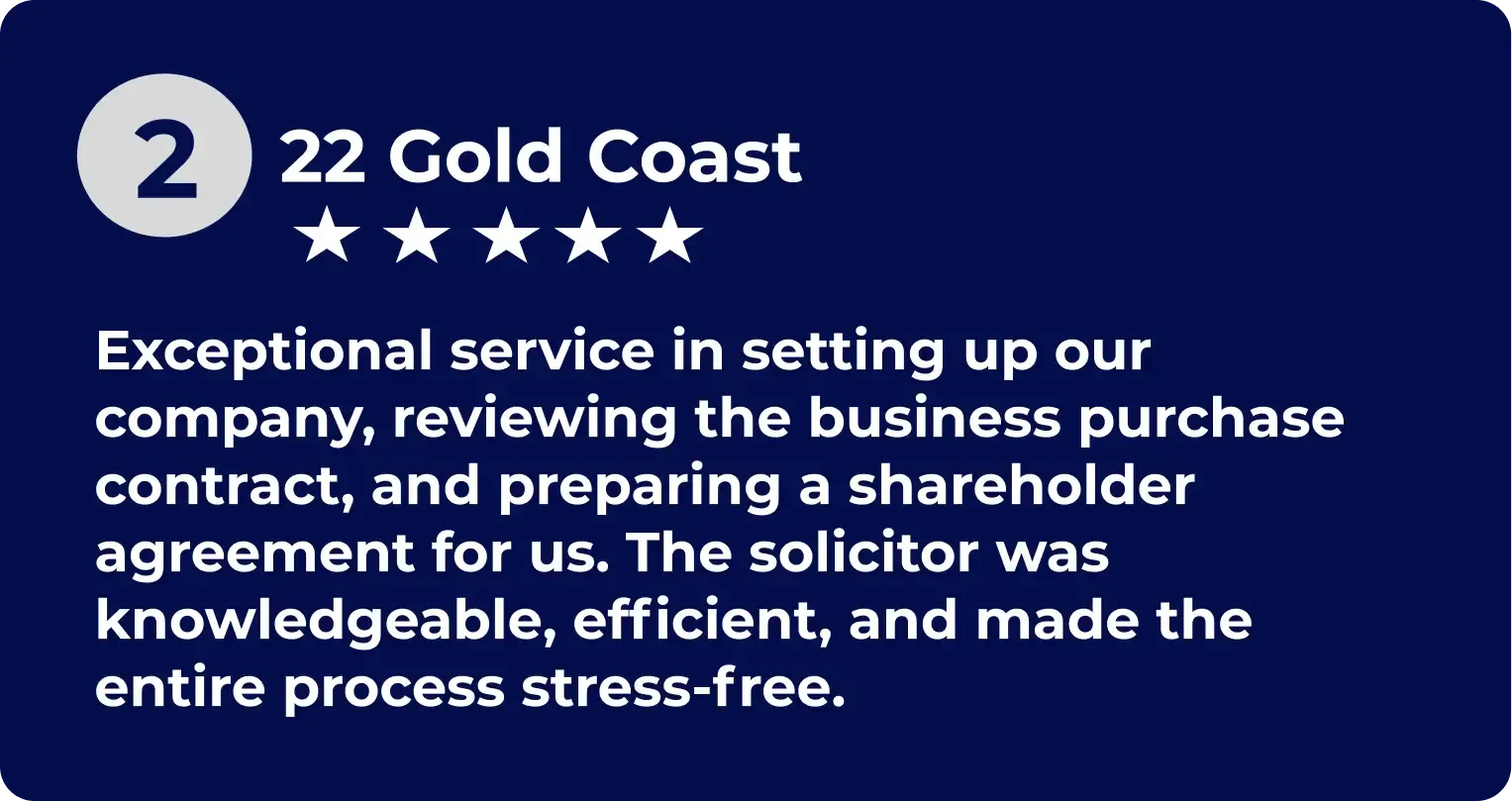
Exceptional service
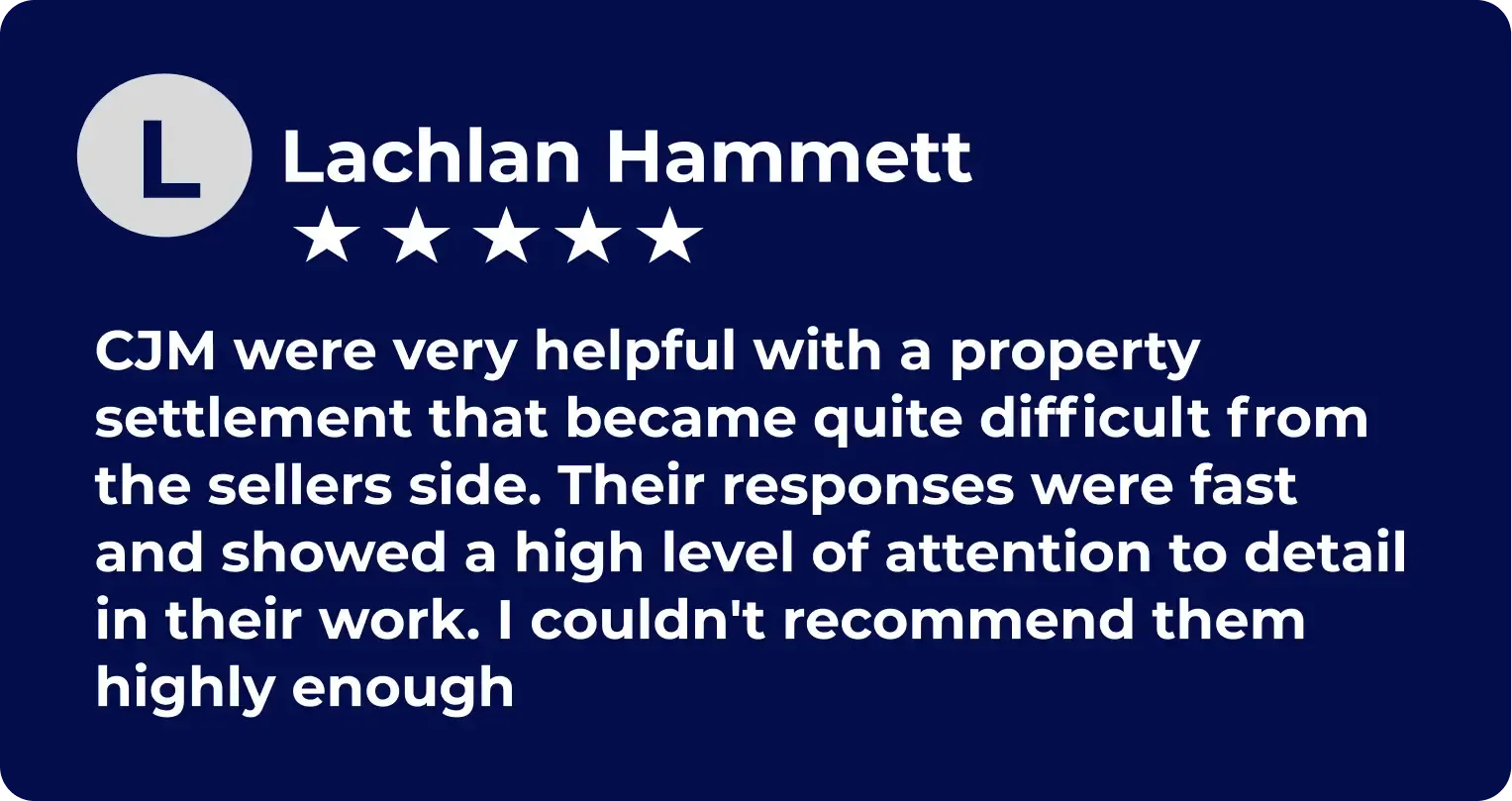
very helpful
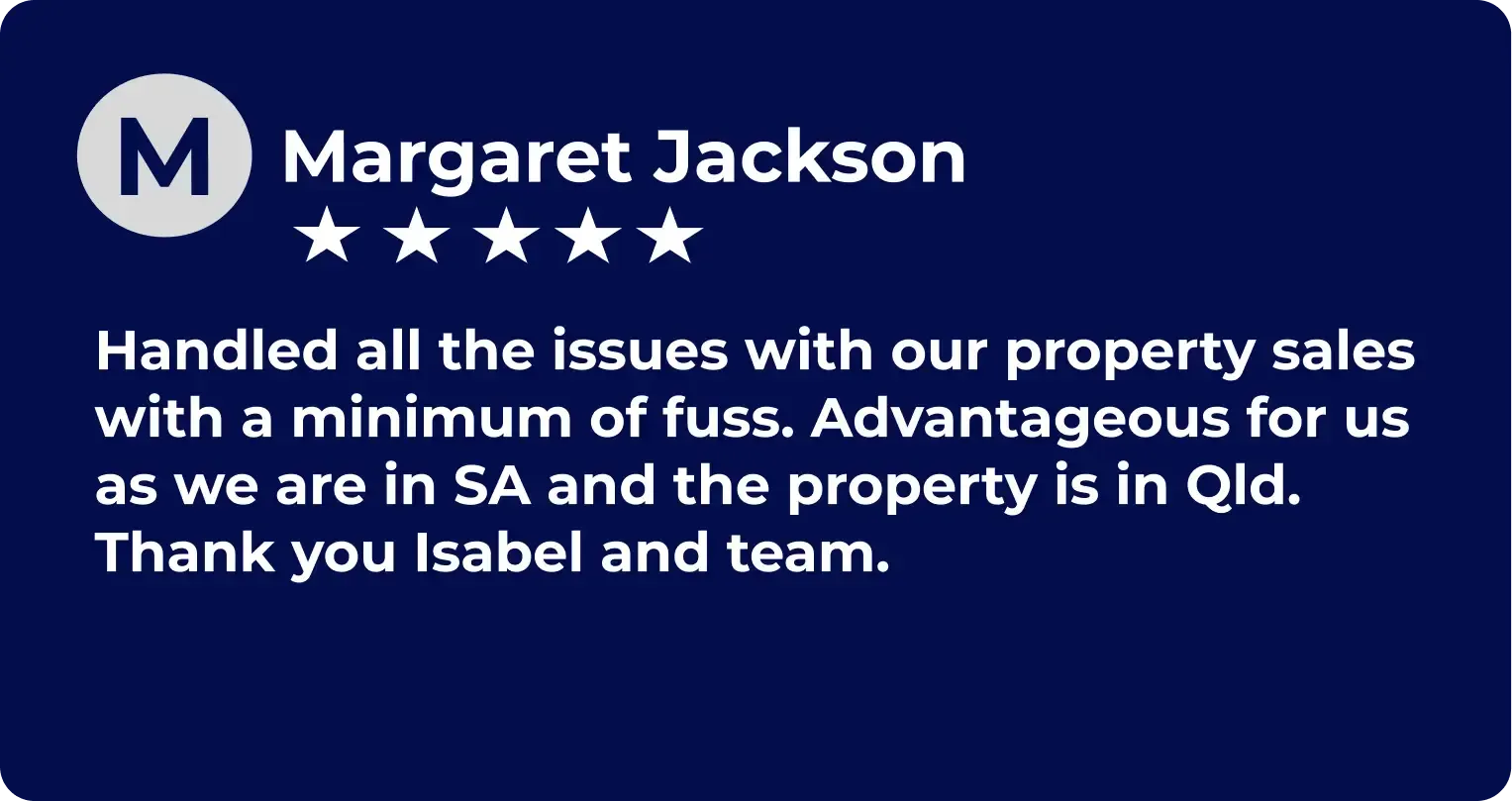
Handling issues