Family Law

Family Lawyers  on the
Gold Coast and Northern NSW


Facing a family law issue, planning ahead or unsure where you stand? Get clear family law advice when it matters most.

Family law matters can involve some of the most important decisions you make for your future. Whether you are responding to a relationship breakdown, making arrangements for your children or planning ahead to protect your assets, financial position and future certainty, early legal guidance can help you understand your rights, options and next steps.


At CJM Lawyers, our family lawyers provide clear, practical and compassionate advice across separation, divorce, parenting matters, property settlements, Binding Financial Agreements, de facto relationship issues, mediation, court applications and domestic and family violence matters. We take the time to understand your circumstances, explain the process clearly and support you in a confidential, respectful setting so you can speak openly and consider your options without pressure.

We can help you if you are:

Experiencing separation, divorce or relationship breakdown

Navigating parenting arrangements, child custody matters or parenting disputes

Ending a de facto relationship and needing advice about parenting property or financial arrangements

Dealing with property settlement, financial separation or superannuation issues after separation

Seeking advice about child support, spousal maintenance or financial obligations

Planning ahead with a Binding Financial Agreement before, during or after a relationship

Considering consent orders or a parenting plan to formalise arrangements

Concerned about domestic and family violence, including protection orders

Unsure of your legal position and want practical guidance during a difficult time

Our Family Law Services

✓ Trusted Family Law Guidance Backed by Experience
✓ Personalised Support Through Every Stage of the Process
✓ Clear, Confidential and Practical Legal Advice
✓ Focused on achieving positive outcomes for you and your family

Separation & Divorce

Advice for clients separating from a spouse or partner, preparing or filing a divorce application, understanding separation timeframes and working through the legal steps that may follow relationship breakdown. We can help you understand what needs attention now, what can wait, and how separation may affect parenting arrangements, financial disclosure, property settlement and future obligations.

Parenting Arrangements & Child Support

Support for parents working through parenting arrangements, child custody matters, parenting plans, consent orders, child support advice and disputes involving children. We focus on practical, child-focused arrangements that consider safety, wellbeing, communication and what may work for your family, including options if circumstances change or agreement becomes difficult.

Property Settlements & Financial Agreements

Advice on property settlements, financial separation, superannuation, debts, businesses, trusts and other financial interests after separation. We also assist with Binding Financial Agreements before, during or after a relationship, including agreements designed to protect assets, business interests, inheritances, children from a previous relationship and future financial certainty.

Mediation, Court Applications & Family Violence Matters

Guidance and representation for family dispute resolution, mediation, consent orders, court applications, protection orders and matters involving domestic and family violence. We provide confidential support where urgent legal steps may be needed, particularly where safety, children, housing or shared finances are involved.

CJM Lawyers crest

Why choose CJM Lawyers for family law?

Family law decisions can affect your children, finances, home and future. Clients often come to us feeling overwhelmed, unsure what to do next or concerned about decisions that may have long-term consequences. Our role is to help you understand the process, identify the issues that matter and move forward with greater certainty.

Why choose CJM Lawyers for family law?

Find answers to common family law questions below.
Have a question not covered here? Enquire today and our family law team can guide you to the right next step.

  • What should I do first if I am separating from my partner?

    Separation can feel overwhelming, particularly if children, property or shared finances are involved. A helpful first step is to obtain legal advice early so you understand your rights, obligations and options before making decisions. We can talk through your situation, explain what to expect and help you identify the most appropriate next steps.

  • How are parenting and child custody arrangements decided?

    Parenting arrangements are guided by what is in the best interests of the child, including their safety, wellbeing and meaningful relationships. Many arrangements can be reached by agreement, but disputes sometimes arise. We can help you understand your options, assist with negotiations and work towards practical, child-focused arrangements.

  • How is property divided after separation?

    Property settlements consider a range of factors, including financial and non-financial contributions, future needs and the overall circumstances of the relationship. There is no one-size-fits-all outcome. We can explain how the law may apply to your situation and help you work towards a fair and appropriate resolution.

  • When should I consider a Binding Financial Agreement?

    A Binding Financial Agreement may be considered before, during or after a relationship where you want clarity about how property, assets or financial responsibilities may be dealt with if the relationship ends. These agreements can help protect assets, business interests, inheritances, children from a previous relationship or future financial certainty. Independent legal advice is essential before signing.

  • Do I need to pay or receive child support?

    Child support is usually assessed using a formula that considers income, care arrangements and the number of children involved. In some cases, private child support agreements may also be suitable. We can explain how child support applies to your situation and guide you through your options.

  • Do I need to go to court to resolve my family law matter?

    Not always. Many family law matters are resolved through negotiation, mediation or family dispute resolution without court proceedings. If court involvement is required, we can guide you through the process and represent your interests. Our focus is to help identify the most appropriate pathway for your circumstances.

  • What help is available if domestic or family violence is involved?

    If domestic or family violence is a concern, safety is the priority. Legal options may include protection orders and court-based remedies. We provide confidential advice and support to help you understand your options and take appropriate steps to protect yourself and your family.


    If you or your children are in immediate danger, contact emergency services. For legal advice about protection orders or related family law steps, our team can provide confidential guidance.

Add your custom HTML here

Getting Started: Start Your Family Law Matter in 4 Simple Steps

If you need family law advice, we’re here to help you take the next step with clarity and support. Getting started with CJM is simple.

1

Contact us

Tell us about your situation and what you need assistance with.

2

Share your details

Complete our intake form so we can understand your circumstances, key details and determine how we can assist.

3

Book your consultation

Once we confirm we can assist, we’ll arrange an appointment with the solicitor best suited to your matter.

Payment of the initial consultation fee is required before you meet with us.

4

Meet with us

We provide practical legal advice, discuss your options and outline the next steps available.

We answer any questions you may have and help you move forward with confidence.

Our Family Law Team

Our family lawyers provide confidential, compassionate and practical support for clients navigating separation, parenting matters, property settlements and other family law issues.

View Our Family Law Team

Shannon MacLaughlin

Shannon MacLaughlin

Director

Stephen Xia

Stephen Xia

Senior Associate

Lauren Crozier

Lauren Crozier

Senior Associate

Carlu Chesterton

Carlu Chesterton

Senior Associate

Our Latest Story

By October 2026 Edition • 8 October 2026
Cash flow pressure, overdue tax and unpaid suppliers can build gradually, leaving company directors unsure whether the business is experiencing a temporary setback or may be insolvent. Recognising the warning signs and seeking advice early may preserve more options and help directors reduce their personal risk. A company is generally insolvent when it cannot pay its debts as and when they fall due. Financial difficulty does not always mean a business must close, but delays in seeking advice can reduce the restructuring options available, increase business losses and expose company directors to greater personal risk. Business Owner vs Company Director: What’s the Difference? A business owner is someone who owns all or part of a business, while a company director is formally appointed to manage a company and has specific legal responsibilities. In many small businesses, the owner is also a director, but this is not always the case – for example, a sole trader is a business owner but not a company director. Company directors are expected to stay informed about the company’s financial position and take action when warning signs emerge. Ignoring the problem or continuing to incur debts without a realistic ability to pay them may expose directors to serious consequences. Common Warning Signs of Insolvency Warning signs may include ongoing losses, poor cash flow, overdue tax or superannuation, suppliers being paid outside normal terms, increasing debt, difficulty collecting money owed to the business, reliance on personal funds, incomplete financial records, payment arrangements with selected creditors, demands or court documents and suppliers moving the company to cash-on-delivery terms. No single warning sign necessarily proves insolvency. However, directors should seek an immediate review of the company’s financial position when several signs occur together, debts cannot be paid on time or the company is relying on new borrowing or personal funds to meet existing obligations. What Are a Company Director’s Responsibilities? Company directors must understand the company’s operations and financial position, ensure proper records are kept and prevent the company from trading while insolvent. If insolvency is suspected, directors should investigate promptly and obtain appropriate accounting and legal advice. Directors should not rely solely on current bank balances. Cash flow forecasts, debts falling due, tax obligations, employee entitlements, available finance and the realistic recoverability of money owed to the company may all be relevant.  What Can Happen If a Company Trades While Insolvent? Continuing to incur debts while insolvent can lead to civil penalties, compensation claims and, in serious cases, criminal consequences. Directors may also face scrutiny over transactions made shortly before an external administration, including payments that unfairly favour one creditor or transfers that remove company assets for less than their true value. What Should Company Directors Do First? Company directors should bring the company’s financial records up to date, prepare a realistic cash flow forecast and identify debts that are already overdue or will shortly fall due. This information can help professional advisers assess whether the company can continue trading and which restructuring or external administration options may remain available. Directors should also avoid selectively paying creditors or transferring assets without advice, as those transactions may later be challenged. Professional advice should be sought before entering new commitments, using personal funds, granting security, selling assets or agreeing to arrangements that may affect creditors. Could the Business Be Restructured? Depending on the company’s circumstances, options may include informal negotiations with creditors, safe harbour planning, small business restructuring, voluntary administration or liquidation. The most appropriate pathway will depend on whether the underlying business is viable, the level and type of debt, available assets and the support of key stakeholders. Early advice is important because some options require careful planning and may no longer be available once the company has exhausted its cash or creditor support. How CJM Lawyers Can Help CJM Lawyers can advise company directors experiencing financial distress, assess legal risk, explain restructuring and external administration options and work alongside accountants and registered insolvency practitioners. We can also assist with creditor negotiations, statutory demands, court proceedings and disputes involving liquidators or company transactions. If your company is struggling to pay debts when they fall due, has overdue tax or superannuation, or is relying on personal funds to meet ongoing expenses, contact CJM Lawyers early. Timely advice may help clarify whether the company is insolvent, preserve restructuring options and reduce the risk of the situation becoming more difficult to manage. Disclaimer: This article provides general information only and does not constitute legal advice. The information may not apply to your circumstances and should not be relied on as a substitute for tailored legal advice. If you need advice, please contact CJM Lawyers to speak with one of our legal professionals.
By October 2026 Edition • 8 October 2026
Received a termination notice from your developer? Before accepting a refund or assuming the contract is over, take steps to protect your position. When an off-the-plan development is delayed, a developer may seek to end the sale contract by relying on a sunset clause or another contractual right. The notice can appear final, but whether the termination is valid will depend on the contract, the circumstances surrounding the delay and the steps taken by each party. CJM Lawyers recently acted for a purchaser in successfully disputing a developer’s attempt to terminate an off-the-plan contract relating to the Chevron One development on the Gold Coast. The Queensland Supreme Court declared the contracts valid and binding, verifying why buyers should obtain advice before treating a termination notice as the end of a matter. 1. Do Not Immediately Accept a Refund or Sign Further Documents Accepting the return of your deposit, signing a release or agreeing that the contract has ended may affect the options available to you. Before responding, seek legal advice about what the notice means and whether the developer has a valid right to terminate. 2. Check the Deadline for Responding The notice or contract may contain strict timeframes. Record the date the notice was received and arrange an urgent review so that any response, objection or court application can be considered before a deadline passes. 3. Gather the Contract and All Supporting Documents Locate the signed contract, disclosure material, variations, extension notices, emails, letters and any updates about construction or registration. These documents can help establish what the parties agreed, what caused the delay and whether the required process was followed. 4. Review the Sunset Clause and Termination Wording A sunset date passing does not necessarily mean a developer can automatically cancel. The exact wording of the contract, any notice requirements and the relevant law must be considered together. 5. Create a Timeline of the Development Prepare a simple timeline recording key dates, promised completion dates, extensions, reported causes of delay and communications from the developer. This can help us assess whether the developer contributed to the delay or complied with its obligations. 6. Be Clear About the Outcome You Want Some buyers want the contract to remain on foot so they can complete the purchase. Others may prefer to exit and recover their deposit. Your preferred outcome will help shape the legal and commercial strategy. 7. Obtain Legal Advice Early Early advice can help you understand whether the termination is likely to be valid, identify urgent steps and avoid actions that could weaken your position. Depending on the circumstances, options may include disputing the notice, negotiating with the developer or seeking court orders. How CJM Lawyers Can Help CJM Lawyers can review your off-the-plan contract, termination notice and supporting documents, explain your options and communicate with the developer on your behalf. Our Litigation team can also represent you in negotiations and court proceedings where necessary. If a developer is trying to cancel your off-the-plan contract, contact CJM Lawyers before accepting a refund, signing further documents or walking away from a property you still want to secure. Disclaimer: This article provides general information only and does not constitute legal advice. The information may not apply to your circumstances and should not be relied on as a substitute for tailored legal advice. If you need advice, please contact CJM Lawyers to speak with one of our legal professionals.
By September 2026 Edition • 10 September 2026
Bought off-the-plan and the developer is trying to cancel your contract? Don’t assume it’s the end of the road. Buying property is exciting, but buying off the plan comes with a unique risk: you are committing to a home or investment before it has been built. If completion is delayed and the developer later tries to walk away from the contract, buyers can be left uncertain about their rights, their deposit and the property they hoped to secure. That issue was recently considered by the Queensland Supreme Court in a case involving Chevron One Apartments on the Gold Coast, Queensland. CJM Lawyers acted for one of the purchasers in successfully disputing the developer’s right to terminate. The Court declared the contracts valid and binding, reinforcing an important message for buyers: if you receive a termination notice, it is worth getting legal advice before assuming your contract is over. What Is an Off-the-Plan Property? An off-the-plan property is a property purchased before construction is complete. Instead of buying an existing apartment, townhouse or home, the buyer enters into a contract based on plans, specifications and development documents. This type of purchase can appeal to buyers who want to secure a property early, plan a future move, arrange finance over time or invest before a project is complete. However, because construction and registration can take months or even years, off-the-plan contracts often include strict timelines and conditions that buyers need to understand before settlement. What Is a Sunset Clause? A sunset clause sets a deadline for important steps in a development to be completed. In an off-the-plan contract, this may include registration of the plan, creation of title, completion of construction or settlement. If the deadline passes and the required steps have not happened, the contract may give one or both parties a right to end the contract. However, that right is not always automatic – especially where a developer is relying on the clause to cancel the contract. The wording of the contract, the reason for the delay and any relevant legal requirements all need to be carefully considered. A Recent Win for Property Buyers CJM Lawyers recently acted for one of the purchasers in Supreme Court proceedings concerning the Chevron One development on the Gold Coast. The purchasers had entered into off-the-plan contracts in 2021, with settlement to occur by dates set several years later. When those dates passed, the developer sought to end the contracts. The buyers refused to accept the terminations and took the matter to the Supreme Court. CJM Lawyers acted for one of the purchasers in successfully disputing the developer’s right to terminate. The Queensland Supreme Court declared the contracts valid and binding. Critically, the Court found no basis for allowing the developer to benefit from its own breach of contract. The developer's attempt to point to pandemic-related supply chain disruptions as justification for termination was also rejected. What Should Buyers Do If a Developer Tries to Terminate? If a developer sends you a sunset clause termination notice, do not assume your contract is over. Whether the termination is valid may depend on the wording of the contract, the reason for the delay, the timing of the notice and the steps taken by each party. You should seek legal advice as soon as possible if your development has experienced lengthy delays, you have received a termination notice, a developer is relying on a sunset clause, or you are unsure whether your contract is still binding. Getting advice early can help you understand your rights before you accept a refund, sign documents or make decisions that may affect your legal position. How CJM Lawyers Can Help CJM Lawyers can assist buyers with off-the-plan property disputes, sunset clause issues and proposed contract terminations. Our Litigation team can review your contract and supporting documents, assess whether a termination is likely to be valid, explain your options, negotiate with developers and represent you in court proceedings where necessary. If your developer is trying to cancel your off-the-plan contract, speak with CJM Lawyers before accepting a refund, signing further documents or walking away from a property you still want to secure. Disclaimer: This article provides general information only and does not constitute legal advice. The information may not apply to your circumstances and should not be relied on as a substitute for tailored legal advice. If you need advice, please contact CJM Lawyers to speak with one of our legal professionals.
Show More

Our Client's Say

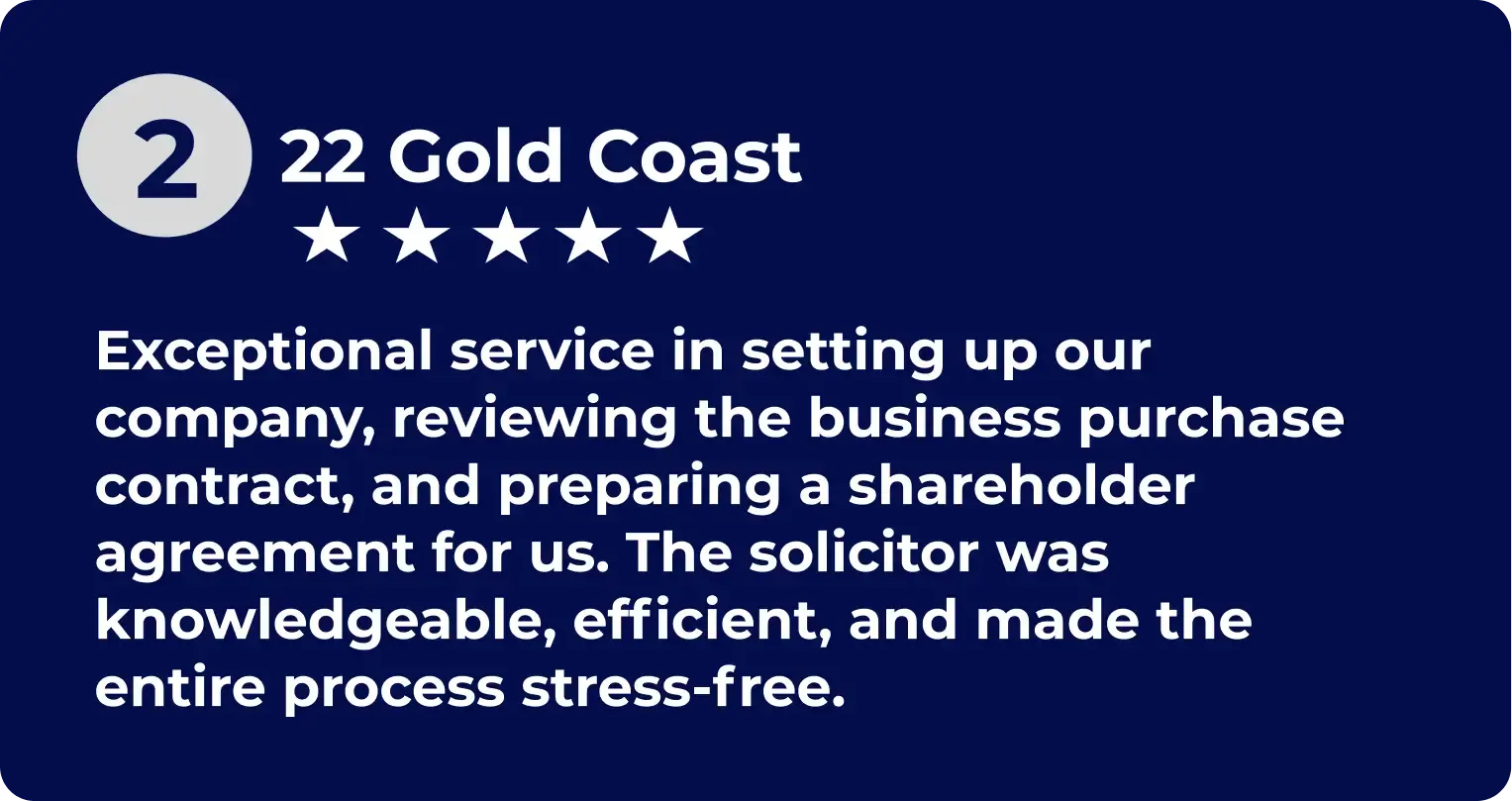
Exceptional service
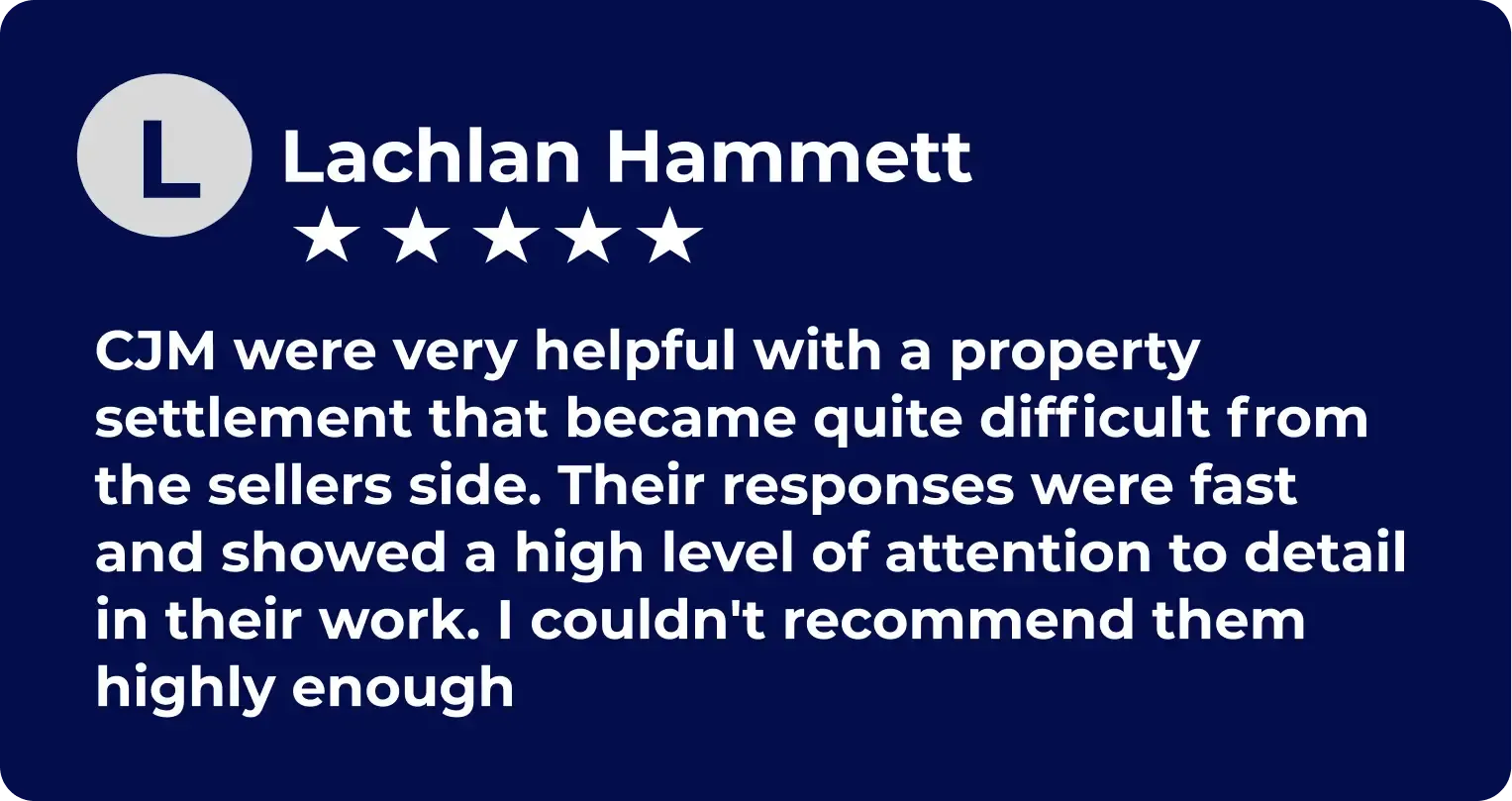
very helpful
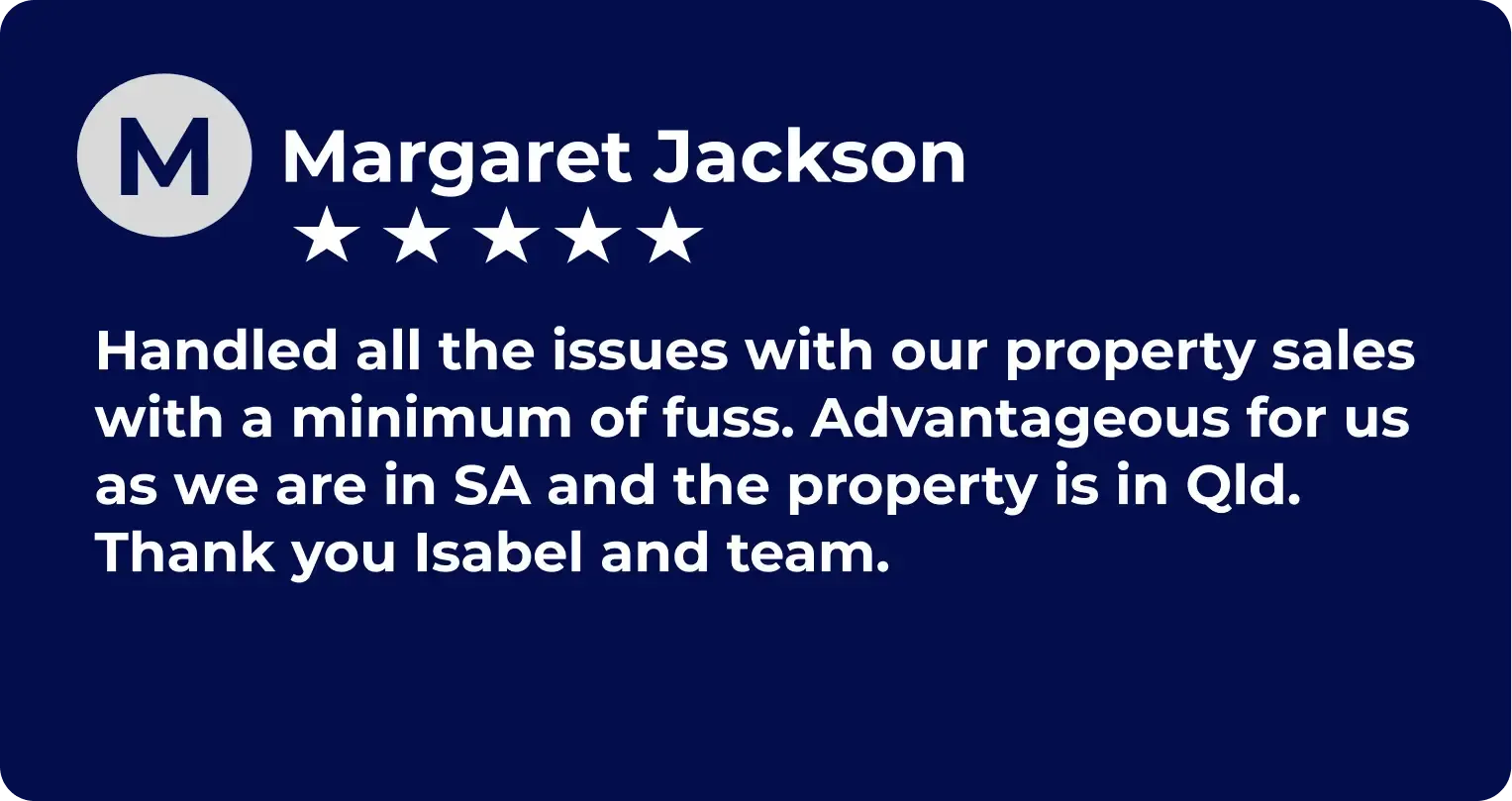
Handling issues