FAMILY LAW

Reliable Family Law Solutions In Gold Coast and Northern NSW

Family law matters often stir strong emotions, and we understand that separation or divorce can bring significant stress and uncertainty. At CJM Lawyers, our experienced team is dedicated to providing professional guidance, empowering you to make informed and confident decisions, no matter how challenging the circumstances.

A couple with a child.

HOW WE CAN HELP

At CJM Lawyers, we pride ourselves on taking a compassionate and personalised approach. We understand that every client’s situation is unique, and our goal is to provide support that meets your individual needs, without adding unnecessary stress or complications for you or your loved ones. We’re here to offer thoughtful, tailored assistance because we know that everyone copes differently and deserves to be heard and supported.

HIGH-QUALITY FAMILY LAW SERVICES
At CJM Lawyers, we provide high-quality family law services that cover all aspects of separation and related issues. We understand that these matters can disrupt your daily life and may involve complex issues or communication challenges. That’s why we're committed to reducing your burden by handling the legal process efficiently and supporting you every step of the way.

OUR KEY SERVICES:

  • Advice on divorce and separation
  • Property and asset division for married couples and de facto partners, including spousal maintenance
  • Parenting and child support matters
  • Assistance with court orders and binding financial agreements
  • Mediation and Court representation


WHY CHOOSE CJM LAWYERS?
At CJM Lawyers, we believe in clear communication and tailored solutions. With extensive experience in family law and a focus on achieving positive outcomes, we’re here to support you through life’s difficult transitions with confidence and care.


A couple with their two children
A family of four

OUR KEY SERVICES:

  • Advice on divorce and separation
  • Property and asset division for married couples and de facto partners, including spousal maintenance
  • Parenting and child support matters
  • Assistance with court orders and binding financial agreements
  • Mediation and Court representation


WHY CHOOSE CJM LAWYERS?
At CJM Lawyers, we believe in clear communication and tailored solutions. With extensive experience in family law and a focus on achieving positive outcomes, we’re here to support you through life’s difficult transitions with confidence and care.

A father and mother with their child

HOW WE CAN HELP

At CJM Lawyers, we pride ourselves on taking a compassionate and personalised approach. We understand that every client’s situation is unique, and our goal is to provide support that meets your individual needs, without adding unnecessary stress or complications for you or your loved ones. We’re here to offer thoughtful, tailored assistance because we know that everyone copes differently and deserves to be heard and supported.

HIGH-QUALITY FAMILY LAW SERVICES
At CJM Lawyers, we provide high-quality family law services that cover all aspects of separation and related issues. We understand that these matters can disrupt your daily life and may involve complex issues or communication challenges. That’s why we're committed to reducing your burden by handling the legal process efficiently and supporting you every step of the way.

A family of four

OUR KEY SERVICES:

  • Advice on divorce and separation
  • Property and asset division for married couples and de facto partners, including spousal maintenance
  • Parenting and child support matters
  • Assistance with court orders and binding financial agreements
  • Mediation and Court representation


WHY CHOOSE CJM LAWYERS?
At CJM Lawyers, we believe in clear communication and tailored solutions. With extensive experience in family law and a focus on achieving positive outcomes, we’re here to support you through life’s difficult transitions with confidence and care.

  • Experienced Legal Team – Our team brings years of experience in divorce, parenting arrangements, property settlements, and related family law matters.
  • Client-Focused Approach – We prioritise your best interests, offering clear guidance and professional representation every step of the way.
  • Practical & Effective Solutions – Whether through negotiation, mediation, or court proceedings, we work to secure the best possible outcome for your situation.
  • Confidential & Supportive Service – We provide a safe, respectful, and confidential environment where you feel supported throughout the process.

Contact Us Today

Our qualified team delivers personalised, compassionate and strategic legal solutions tailored to your individual circumstances.


Stephen Xia

Associate

Book Now Get in Touch
Alison Schultz

Need help with a family law matter?

From separation to support, we're here to guide you every step of the way.

Call Today
Stephen Xia

Contact Us Today

Don't let legal challenges ground your operations. Our qualified team delivers personalised, compassionate and strategic legal solutions tailored to your individual circumstances.

Stephen Xia

Associate

Contact Us Today

Our qualified team delivers personalised, compassionate and strategic legal solutions tailored to your individual circumstances.

Stephen Xia

Associate

Need help with a family law matter?

From Separation to support, we're here to guide you every step of the way.

Call Today

Need help with a family law matter?

From separation to support, we're here to guide you every step of the way.

Call Today

Contact Us Now!

For comprehensive legal services, 
book now for your free initial consultation.

Contact Us

Book Now!

Property & Conveyancing
Guarantor  Advice
Commercial & Business
Wills and Estates
Building Disputes
Employment Law
Corporate & Commercial 
Litigation
Regulatory Compliance
Immigration
Litigation
Insolvency & Bankruptcy

Contact Us Now!

For comprehensive legal services, 
book now for your free initial consultation.

Contact Us

Book Now!

Property & Conveyancing
Guarantor  Advice
Commercial & Business
Wills and Estates
Building Disputes
Employment Law
Corporate & Commercial 
Litigation
Regulatory Compliance
Retail & commercial leasing, business transactions, company & trust sales, property development, guarantor advice

Our Latest Story

By Kale Venz 3 February 2026
You’ve served your payment schedule disputing a construction payment claim. Now the claimant has applied for adjudication. What happens next? Many respondents enter the adjudication process unprepared, not realising how quickly decisions are made or how binding they are. Understanding the adjudication process under Queensland’s Building Industry Fairness (Security of Payment) Act 2017 and NSW’s Building and Construction Industry Security of Payment Act 1999 is critical to protecting your interests. What Is Adjudication? Adjudication is a fast-track dispute resolution process designed to provide interim cash flow relief while preserving parties’ rights to pursue final resolution through court or arbitration. An independent adjudicator reviews the payment claim, payment schedule, and supporting materials, then makes a binding determination on how much must be paid. The key word is interim. The adjudicator’s decision determines payment obligations temporarily, not permanently. However, most disputes end at adjudication – the cost and delay of further litigation means parties often accept the determination as final. The Timeline: Speed Is Everything Adjudication moves fast. Once an application is made: Queensland : You typically have 10 business days to file your adjudication response. The adjudicator then has 15 business days to make a determination (extendable to 20 days with consent). New South Wales: You have 5 business days to file your response (extendable to 10 days with claimant consent). The adjudicator has 10 business days to decide (extendable to 15 days). These timeframes are strictly enforced. Late submissions may be rejected entirely, leaving you unable to present your case. What goes into an Adjudication Response? Your adjudication response is your opportunity to defend your position. It must be comprehensive because you’re limited to the reasons you included in your payment schedule – no new arguments are permitted. A strong response typically includes: Detailed submissions: Explaining why the scheduled amount is correct, addressing each element of the claim Supporting evidence: Contracts, correspondence, site records, photographs, expert reports, invoices Legal analysis: Interpretation of contract terms, legislative requirements, and relevant case law Technical challenges: Jurisdictional objections, validity issues with the claim or adjudication application This is not a simple letter. Adjudication responses regularly run 30–50 pages with extensive annexures. The adjudicator will be reviewing both parties’ submissions simultaneously, so clarity and organisation matter. The Adjudicator’s Decision The adjudicator will issue a written determination setting out their decision and reasons. They can: Uphold the claimed amount in full Accept your scheduled amount Determine a different amount between the two In both Queensland and NSW, you must pay the adjudicated amount within 5 business days (or as specified in the determination). Failure to pay can result in the claimant suspending work or, more seriously, obtaining a judgment for the debt and pursuing enforcement action against your company. Can You Challenge the Decision? Yes, but the grounds are narrow. You can apply to court to set aside an adjudication determination for: Jurisdictional error: The adjudicator made a decision they had no power to make Denial of natural justice: You weren’t given a fair opportunity to present your case Generally, you cannot challenge the adjudicator’s decision simply because you disagree with their assessment of the facts or law. The threshold for setting aside a determination is high. Importantly, you must still pay the adjudicated amount even while challenging the determination. The principle is “pay now, argue later.” The Importance of Early Preparation The adjudication timeframes are tight. Once you serve a payment schedule disputing a claim, you should assume adjudication is coming and start preparing immediately: Waiting until the adjudication application arrives leaves you scrambling. In NSW, with only 5 business days to respond, delay can be fatal to your case. Get Legal Guidance Adjudication is a high-pressure, time-critical process that requires immediate action and strategic thinking. Whether you’re facing an adjudication application or considering applying for one yourself, experienced legal advice makes the difference between success and failure. CJM Lawyers’ litigation and dispute resolution team regularly represents clients in security of payment adjudications across Queensland and NSW. We understand what adjudicators look for, how to present your case effectively, and how to protect your interests under tight deadlines. Don’t navigate adjudication alone – contact CJM Lawyers today. Disclaimer: This article provides general information only and does not constitute legal advice. Every adjudication is unique and requires specific legal advice tailored to your circumstances. Contact CJM Lawyers promptly if you are involved in a security of payment dispute.
By Kale Venz 3 February 2026
A payment claim arrives from your contractor demanding payment. Your instinct might be to set it aside while you check the details. That delay could be the most expensive mistake you make. Under Queensland’s Building Industry Fairness (Security of Payment) Act 2017 and NSW’s Building and Construction Industry Security of Payment Act 1999, you could become legally obligated to pay the full amount – even if you dispute the work – simply by failing to respond on time. What Is a Payment Claim? A payment claim is a formal written demand for payment under a construction contract. It doesn’t need to be labelled “payment claim” – an invoice or progress claim identifying the work and amount will often suffice. These claims are designed to keep cash flowing through construction projects, giving claimants a fast-track recovery process. The Danger of Doing Nothing If you don’t respond by serving a payment schedule within the prescribed timeframe, you are deemed to have admitted the claim. This means you become liable to pay the full amount – even if the work was defective or never performed. The claimant can take immediate debt recovery action, and you lose your right to dispute through adjudication. The Timeframes Are Tight Unless your contract provides otherwise, the timeframes are tight and are usually: Queensland: 15 business days from receiving the payment claim to serve a payment schedule. New South Wales: 10 business days from receiving the payment claim to serve a payment schedule. These are strict deadlines with limited discretion for extensions. The consequences of missing them are severe. What Is a Payment Schedule? A payment schedule is your formal response to the claim. It must identify the claim, state the amount you propose to pay (which can be zero), and provide reasons if you’re paying less than claimed. What Happens Next? After serving a payment schedule, the claimant can either accept your scheduled amount or apply for adjudication – a rapid process (typically 10–15 business days) where an independent adjudicator reviews the dispute. The adjudicator’s decision is binding, meaning you must pay the adjudicated amount even if you plan to challenge it later in court. Why You Need Legal Advice Now Time is not on your side. Getting legal advice immediately is essential to: Assess validity: Not every claim is valid under the legislation. A lawyer can identify defences quickly. Prepare a payment schedule: An invalid payment schedule leaves you exposed as if you hadn’t responded at all. Don’t Let the Clock Run Out Security of payment legislation protects cash flow in the construction industry, but it places significant responsibility on you to respond quickly and correctly. The penalty for getting it wrong is severe. Our experienced litigation team regularly assists clients with security of payment disputes across Queensland and NSW. We can review your claim, prepare a compliant payment schedule, gather evidence, and represent you in adjudication if required. Don’t face this alone – contact CJM Lawyers today. Disclaimer: This article provides general information only and does not constitute legal advice. Security of payment legislation is complex and fact-specific. It is essential to seek specific professional legal advice tailored to your individual circumstances as soon as you receive a payment claim.
By Luis Gonzalez 20 January 2026
A Practical Perspective for NSW and Queensland Matters In New South Wales and Queensland, the legal profession is fused. Both solicitors and barristers are qualified legal practitioners, and there is no procedural requirement to brief counsel at any particular stage of a matter. That often leads clients to delay the decision. In practice, the question is not whether a barrister is required, but whether the matter has reached a point where the risks involved justify specialist advocacy and advice. Engaging a barrister is not a sign that a dispute has escalated beyond control. It is a strategic decision about how that dispute should be managed. What a Barrister Actually Brings to a Matter Barristers are commonly associated with court appearances and trials. In reality, much of their value lies well before a matter reaches a hearing. They are trained to analyse risk, test legal arguments, and anticipate how a court is likely to respond to a case as it develops. Early involvement often focuses on advising on prospects, settling pleadings, shaping evidence, and identifying which issues genuinely matter. In many cases, this prevents problems that become expensive or impossible to correct later. The Importance of Timing One of the most common points at which counsel should be considered is before pleadings are finalised. Once pleadings are filed, positions harden. Admissions may be made inadvertently, causes of action may be poorly framed, and procedural vulnerabilities may be exposed. Fixing these issues later usually involves contested applications and additional cost. Similarly, when interlocutory applications are threatened or underway, the stakes increase quickly. Applications such as strike-outs, summary judgment, or injunctions can determine the direction of a matter long before trial. These are moments where technical precision and courtroom experience matter. Another common trigger is when a dispute turns on a narrow or unsettled point of law. Some cases are fact driven. Others are decided almost entirely on statutory interpretation or competing authorities. Where that is the case, specialist advice is not a luxury – it is essential. Costs Risk and Commercial Reality Litigation is not just about the merits of a claim. It is also about costs exposure. As matters progress, the financial consequences of getting strategy wrong increase. A barrister can provide clear advice on when to push forward, when to reassess, and when settlement should be actively pursued. There is a persistent misconception that briefing counsel necessarily increases costs. In practice, targeted advice at the right time often reduces overall expenditure by narrowing issues, avoiding unnecessary applications, and strengthening settlement positions. NSW and Queensland Considerations While the core principles are consistent across jurisdictions, procedural culture differs slightly. In New South Wales, courts tend to scrutinise pleadings closely and are more receptive to early dispositive applications. This often makes early engagement of counsel particularly valuable. Queensland courts are generally more pragmatic in their approach to case management, but the risk profile still shifts sharply once a matter moves beyond informal negotiation or becomes procedurally complex. In both jurisdictions, the underlying question remains the same: what is the consequence if the current approach is wrong? A Collaborative Model Engaging a barrister does not mean the solicitor steps aside. The solicitor remains responsible for carriage of the matter, evidence gathering, and client communication. Counsel provides a complementary skill set: strategic distance, advocacy experience, and deep familiarity with how courts approach particular issues. The most effective outcomes are usually achieved where solicitors and barristers work together early, rather than when counsel is briefed reactively on the eve of a hearing. Conclusion There is no fixed rule as to when a barrister should be engaged. However, most disputes reach a point where the risks – legal, procedural, or financial, change materially. At that point, the real question is not whether engaging a barrister is necessary, but whether proceeding without one is a risk worth taking. Disputes can arise in everyday life – with neighbours, family members, business partners, landlords, builders, or customers. Often, they start small and quickly become stressful, emotional, and hard to manage. Our litigation team helps you understand your options early, cut through the noise, and work towards the best possible outcome by providing the necessary advice and action. Don’t face the situation alone, talk to CJM Lawyers today!
Show More

Our Latest Story

By Kale Venz 3 February 2026
You’ve served your payment schedule disputing a construction payment claim. Now the claimant has applied for adjudication. What happens next? Many respondents enter the adjudication process unprepared, not realising how quickly decisions are made or how binding they are. Understanding the adjudication process under Queensland’s Building Industry Fairness (Security of Payment) Act 2017 and NSW’s Building and Construction Industry Security of Payment Act 1999 is critical to protecting your interests. What Is Adjudication? Adjudication is a fast-track dispute resolution process designed to provide interim cash flow relief while preserving parties’ rights to pursue final resolution through court or arbitration. An independent adjudicator reviews the payment claim, payment schedule, and supporting materials, then makes a binding determination on how much must be paid. The key word is interim. The adjudicator’s decision determines payment obligations temporarily, not permanently. However, most disputes end at adjudication – the cost and delay of further litigation means parties often accept the determination as final. The Timeline: Speed Is Everything Adjudication moves fast. Once an application is made: Queensland : You typically have 10 business days to file your adjudication response. The adjudicator then has 15 business days to make a determination (extendable to 20 days with consent). New South Wales: You have 5 business days to file your response (extendable to 10 days with claimant consent). The adjudicator has 10 business days to decide (extendable to 15 days). These timeframes are strictly enforced. Late submissions may be rejected entirely, leaving you unable to present your case. What goes into an Adjudication Response? Your adjudication response is your opportunity to defend your position. It must be comprehensive because you’re limited to the reasons you included in your payment schedule – no new arguments are permitted. A strong response typically includes: Detailed submissions: Explaining why the scheduled amount is correct, addressing each element of the claim Supporting evidence: Contracts, correspondence, site records, photographs, expert reports, invoices Legal analysis: Interpretation of contract terms, legislative requirements, and relevant case law Technical challenges: Jurisdictional objections, validity issues with the claim or adjudication application This is not a simple letter. Adjudication responses regularly run 30–50 pages with extensive annexures. The adjudicator will be reviewing both parties’ submissions simultaneously, so clarity and organisation matter. The Adjudicator’s Decision The adjudicator will issue a written determination setting out their decision and reasons. They can: Uphold the claimed amount in full Accept your scheduled amount Determine a different amount between the two In both Queensland and NSW, you must pay the adjudicated amount within 5 business days (or as specified in the determination). Failure to pay can result in the claimant suspending work or, more seriously, obtaining a judgment for the debt and pursuing enforcement action against your company. Can You Challenge the Decision? Yes, but the grounds are narrow. You can apply to court to set aside an adjudication determination for: Jurisdictional error: The adjudicator made a decision they had no power to make Denial of natural justice: You weren’t given a fair opportunity to present your case Generally, you cannot challenge the adjudicator’s decision simply because you disagree with their assessment of the facts or law. The threshold for setting aside a determination is high. Importantly, you must still pay the adjudicated amount even while challenging the determination. The principle is “pay now, argue later.” The Importance of Early Preparation The adjudication timeframes are tight. Once you serve a payment schedule disputing a claim, you should assume adjudication is coming and start preparing immediately: Waiting until the adjudication application arrives leaves you scrambling. In NSW, with only 5 business days to respond, delay can be fatal to your case. Get Legal Guidance Adjudication is a high-pressure, time-critical process that requires immediate action and strategic thinking. Whether you’re facing an adjudication application or considering applying for one yourself, experienced legal advice makes the difference between success and failure. CJM Lawyers’ litigation and dispute resolution team regularly represents clients in security of payment adjudications across Queensland and NSW. We understand what adjudicators look for, how to present your case effectively, and how to protect your interests under tight deadlines. Don’t navigate adjudication alone – contact CJM Lawyers today. Disclaimer: This article provides general information only and does not constitute legal advice. Every adjudication is unique and requires specific legal advice tailored to your circumstances. Contact CJM Lawyers promptly if you are involved in a security of payment dispute.
By Kale Venz 3 February 2026
A payment claim arrives from your contractor demanding payment. Your instinct might be to set it aside while you check the details. That delay could be the most expensive mistake you make. Under Queensland’s Building Industry Fairness (Security of Payment) Act 2017 and NSW’s Building and Construction Industry Security of Payment Act 1999, you could become legally obligated to pay the full amount – even if you dispute the work – simply by failing to respond on time. What Is a Payment Claim? A payment claim is a formal written demand for payment under a construction contract. It doesn’t need to be labelled “payment claim” – an invoice or progress claim identifying the work and amount will often suffice. These claims are designed to keep cash flowing through construction projects, giving claimants a fast-track recovery process. The Danger of Doing Nothing If you don’t respond by serving a payment schedule within the prescribed timeframe, you are deemed to have admitted the claim. This means you become liable to pay the full amount – even if the work was defective or never performed. The claimant can take immediate debt recovery action, and you lose your right to dispute through adjudication. The Timeframes Are Tight Unless your contract provides otherwise, the timeframes are tight and are usually: Queensland: 15 business days from receiving the payment claim to serve a payment schedule. New South Wales: 10 business days from receiving the payment claim to serve a payment schedule. These are strict deadlines with limited discretion for extensions. The consequences of missing them are severe. What Is a Payment Schedule? A payment schedule is your formal response to the claim. It must identify the claim, state the amount you propose to pay (which can be zero), and provide reasons if you’re paying less than claimed. What Happens Next? After serving a payment schedule, the claimant can either accept your scheduled amount or apply for adjudication – a rapid process (typically 10–15 business days) where an independent adjudicator reviews the dispute. The adjudicator’s decision is binding, meaning you must pay the adjudicated amount even if you plan to challenge it later in court. Why You Need Legal Advice Now Time is not on your side. Getting legal advice immediately is essential to: Assess validity: Not every claim is valid under the legislation. A lawyer can identify defences quickly. Prepare a payment schedule: An invalid payment schedule leaves you exposed as if you hadn’t responded at all. Don’t Let the Clock Run Out Security of payment legislation protects cash flow in the construction industry, but it places significant responsibility on you to respond quickly and correctly. The penalty for getting it wrong is severe. Our experienced litigation team regularly assists clients with security of payment disputes across Queensland and NSW. We can review your claim, prepare a compliant payment schedule, gather evidence, and represent you in adjudication if required. Don’t face this alone – contact CJM Lawyers today. Disclaimer: This article provides general information only and does not constitute legal advice. Security of payment legislation is complex and fact-specific. It is essential to seek specific professional legal advice tailored to your individual circumstances as soon as you receive a payment claim.
By Luis Gonzalez 20 January 2026
A Practical Perspective for NSW and Queensland Matters In New South Wales and Queensland, the legal profession is fused. Both solicitors and barristers are qualified legal practitioners, and there is no procedural requirement to brief counsel at any particular stage of a matter. That often leads clients to delay the decision. In practice, the question is not whether a barrister is required, but whether the matter has reached a point where the risks involved justify specialist advocacy and advice. Engaging a barrister is not a sign that a dispute has escalated beyond control. It is a strategic decision about how that dispute should be managed. What a Barrister Actually Brings to a Matter Barristers are commonly associated with court appearances and trials. In reality, much of their value lies well before a matter reaches a hearing. They are trained to analyse risk, test legal arguments, and anticipate how a court is likely to respond to a case as it develops. Early involvement often focuses on advising on prospects, settling pleadings, shaping evidence, and identifying which issues genuinely matter. In many cases, this prevents problems that become expensive or impossible to correct later. The Importance of Timing One of the most common points at which counsel should be considered is before pleadings are finalised. Once pleadings are filed, positions harden. Admissions may be made inadvertently, causes of action may be poorly framed, and procedural vulnerabilities may be exposed. Fixing these issues later usually involves contested applications and additional cost. Similarly, when interlocutory applications are threatened or underway, the stakes increase quickly. Applications such as strike-outs, summary judgment, or injunctions can determine the direction of a matter long before trial. These are moments where technical precision and courtroom experience matter. Another common trigger is when a dispute turns on a narrow or unsettled point of law. Some cases are fact driven. Others are decided almost entirely on statutory interpretation or competing authorities. Where that is the case, specialist advice is not a luxury – it is essential. Costs Risk and Commercial Reality Litigation is not just about the merits of a claim. It is also about costs exposure. As matters progress, the financial consequences of getting strategy wrong increase. A barrister can provide clear advice on when to push forward, when to reassess, and when settlement should be actively pursued. There is a persistent misconception that briefing counsel necessarily increases costs. In practice, targeted advice at the right time often reduces overall expenditure by narrowing issues, avoiding unnecessary applications, and strengthening settlement positions. NSW and Queensland Considerations While the core principles are consistent across jurisdictions, procedural culture differs slightly. In New South Wales, courts tend to scrutinise pleadings closely and are more receptive to early dispositive applications. This often makes early engagement of counsel particularly valuable. Queensland courts are generally more pragmatic in their approach to case management, but the risk profile still shifts sharply once a matter moves beyond informal negotiation or becomes procedurally complex. In both jurisdictions, the underlying question remains the same: what is the consequence if the current approach is wrong? A Collaborative Model Engaging a barrister does not mean the solicitor steps aside. The solicitor remains responsible for carriage of the matter, evidence gathering, and client communication. Counsel provides a complementary skill set: strategic distance, advocacy experience, and deep familiarity with how courts approach particular issues. The most effective outcomes are usually achieved where solicitors and barristers work together early, rather than when counsel is briefed reactively on the eve of a hearing. Conclusion There is no fixed rule as to when a barrister should be engaged. However, most disputes reach a point where the risks – legal, procedural, or financial, change materially. At that point, the real question is not whether engaging a barrister is necessary, but whether proceeding without one is a risk worth taking. Disputes can arise in everyday life – with neighbours, family members, business partners, landlords, builders, or customers. Often, they start small and quickly become stressful, emotional, and hard to manage. Our litigation team helps you understand your options early, cut through the noise, and work towards the best possible outcome by providing the necessary advice and action. Don’t face the situation alone, talk to CJM Lawyers today!
Show More

Our Clients Say

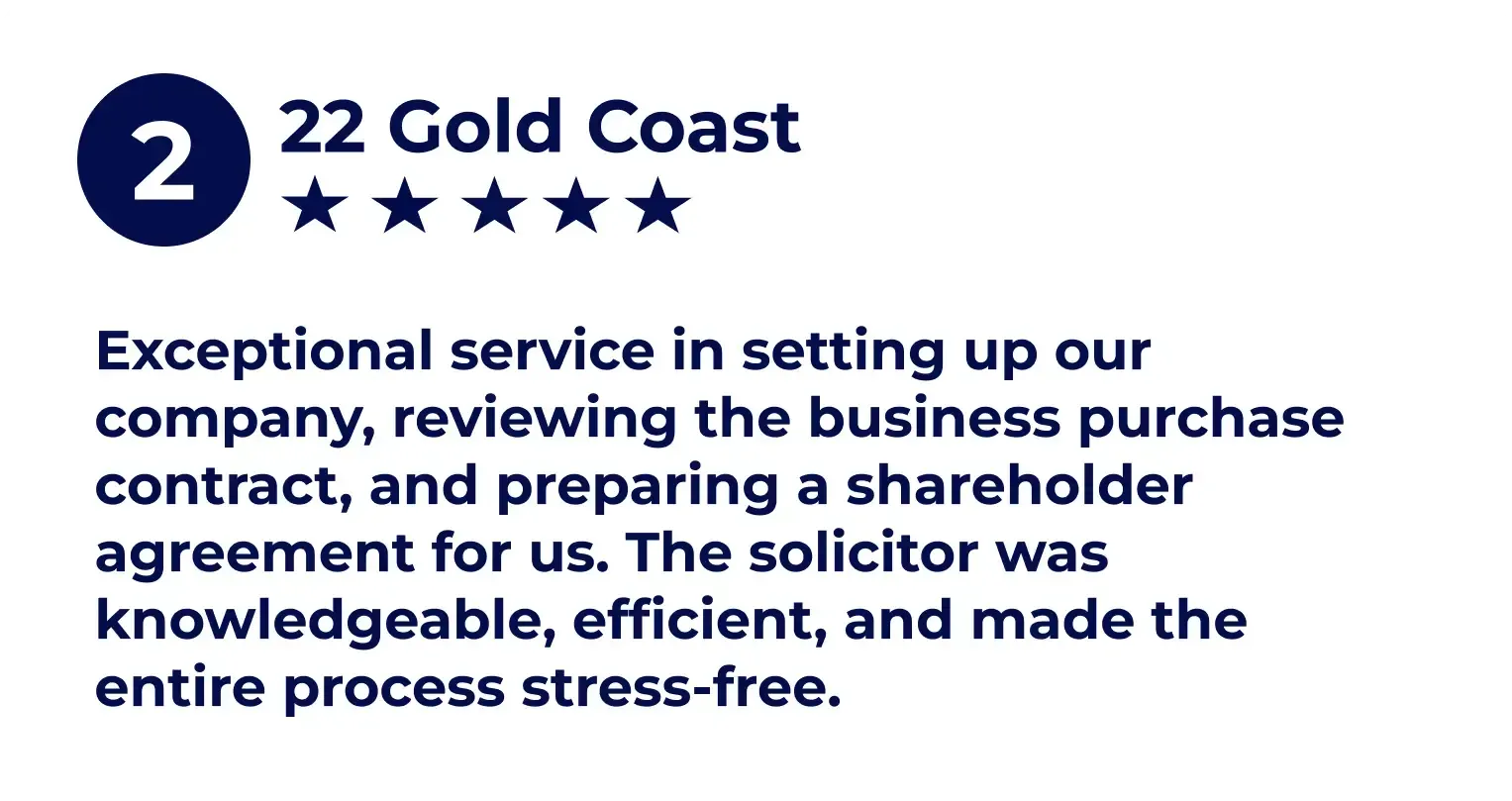
Gold coast excepitional service
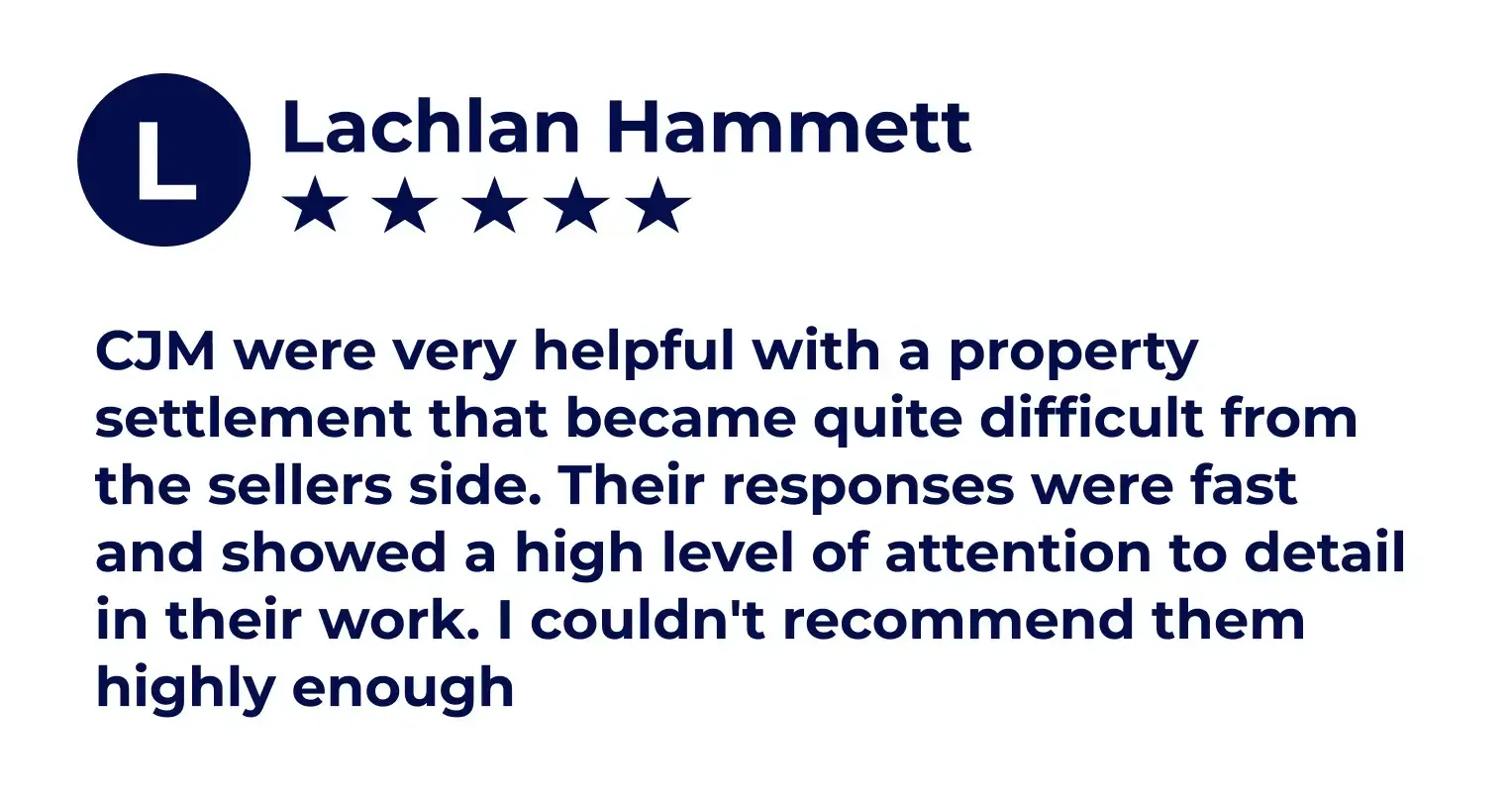
Lachlan Hammet
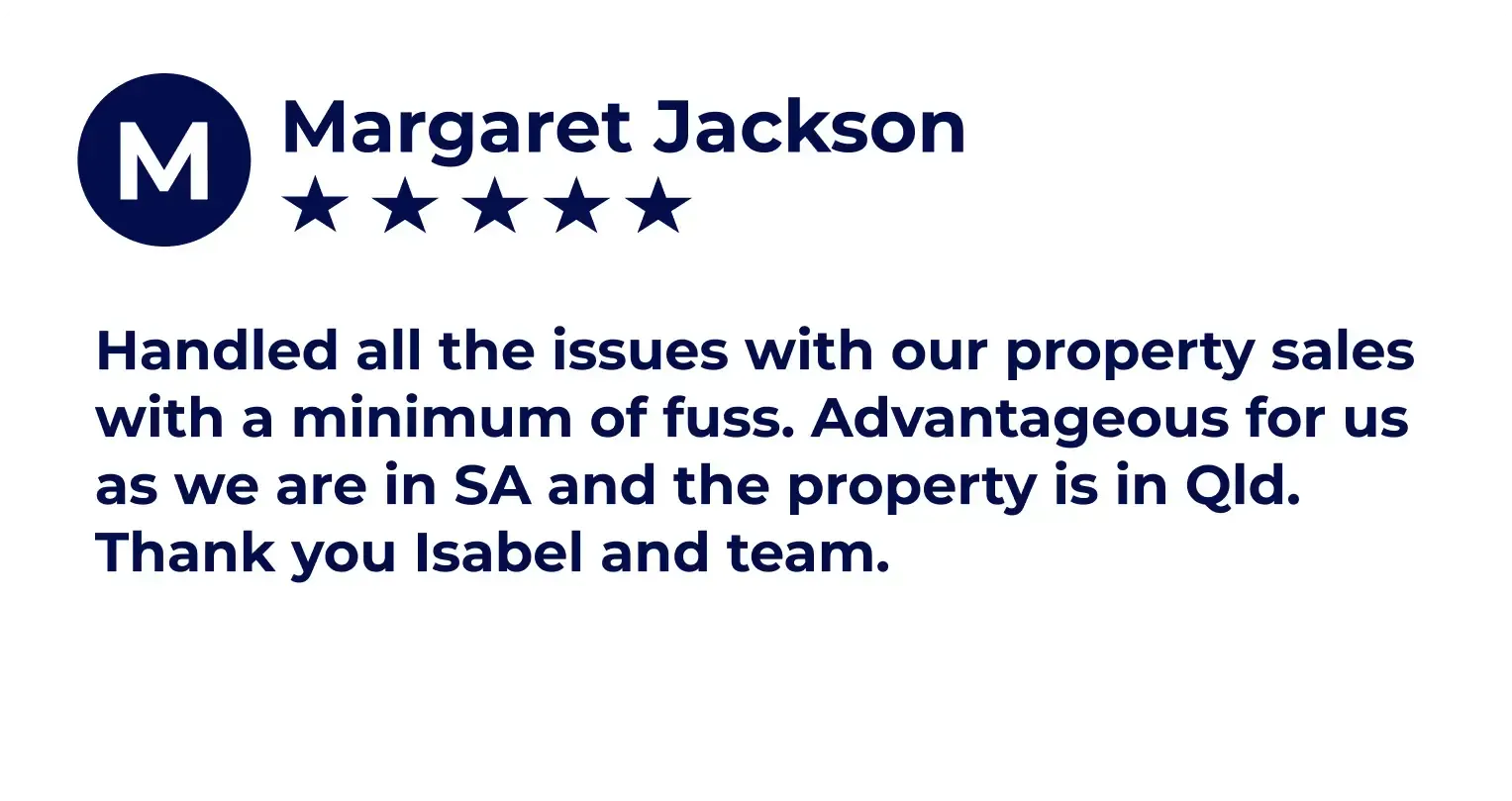
Margaret Jackson

Our Clients Say

Gold coast excepitional service
Lachlan Hammet